side chat
func_camzones and func_poi redux
09.23.26
I spent nearly all of July and August working to basically re-do a lot of finished work in my Godot project. Since this is my first proper gamedev project, I have been focused on a small, obtainable goal: create a few trigger volumes which store data.
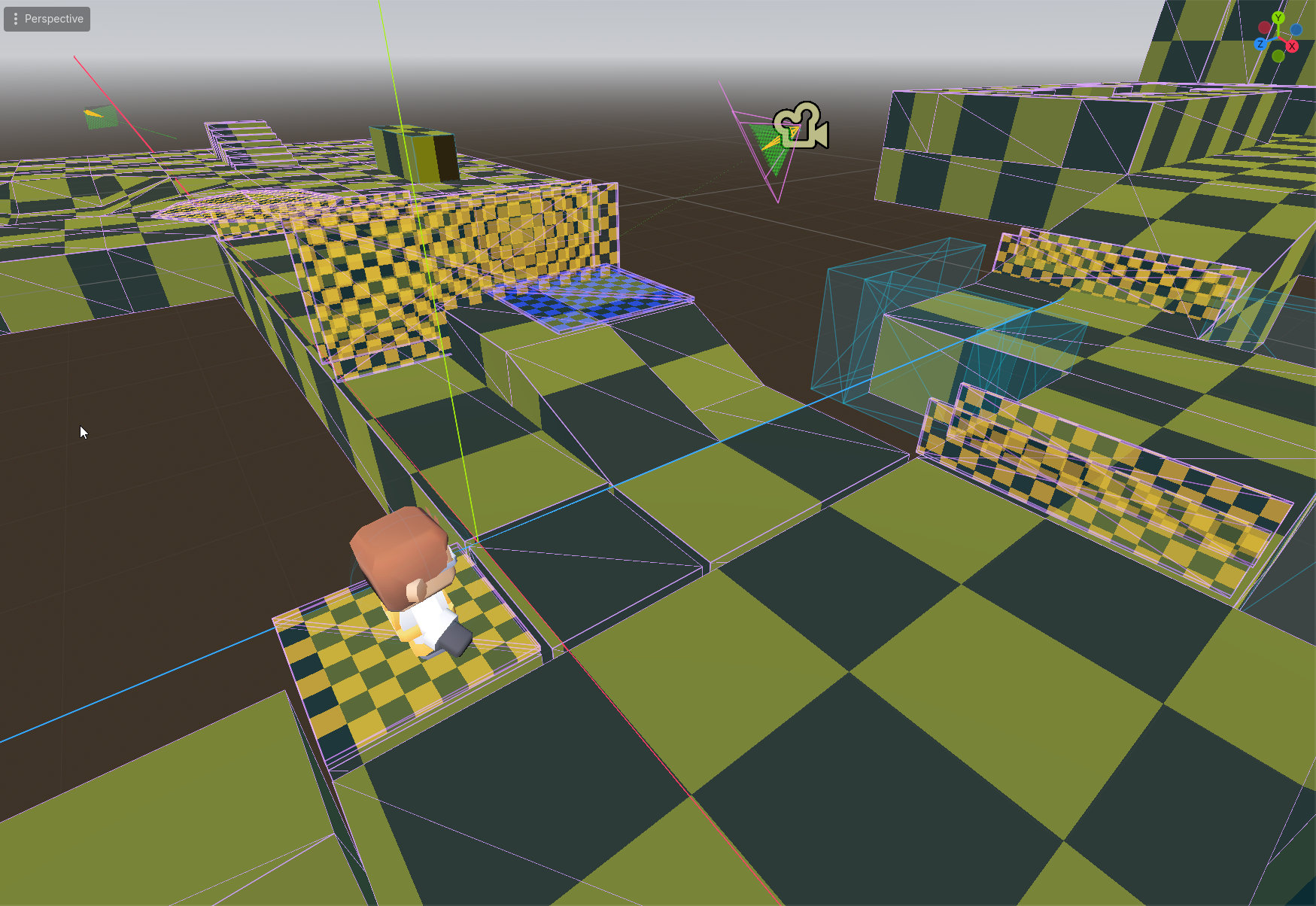
Doesn't sound very remarkable, I know. But it's fascinated me nonetheless. The two kinds of boxes you see in the above screenshot are the products of the labor I'm talking about. One is a Point of Interest and the other is a Camzone. I've written about Points of Interests in the past, but in short they are areas which prompt the player to press a button which triggers a dialog sequence.
But the Camzone is new. It is an area which listens for collisions between itself and the player, and when that is detected it sends a specific position and rotation value to the player's camera. This is how I create the classic Resident Evil-style fixed-camera perspective angles.
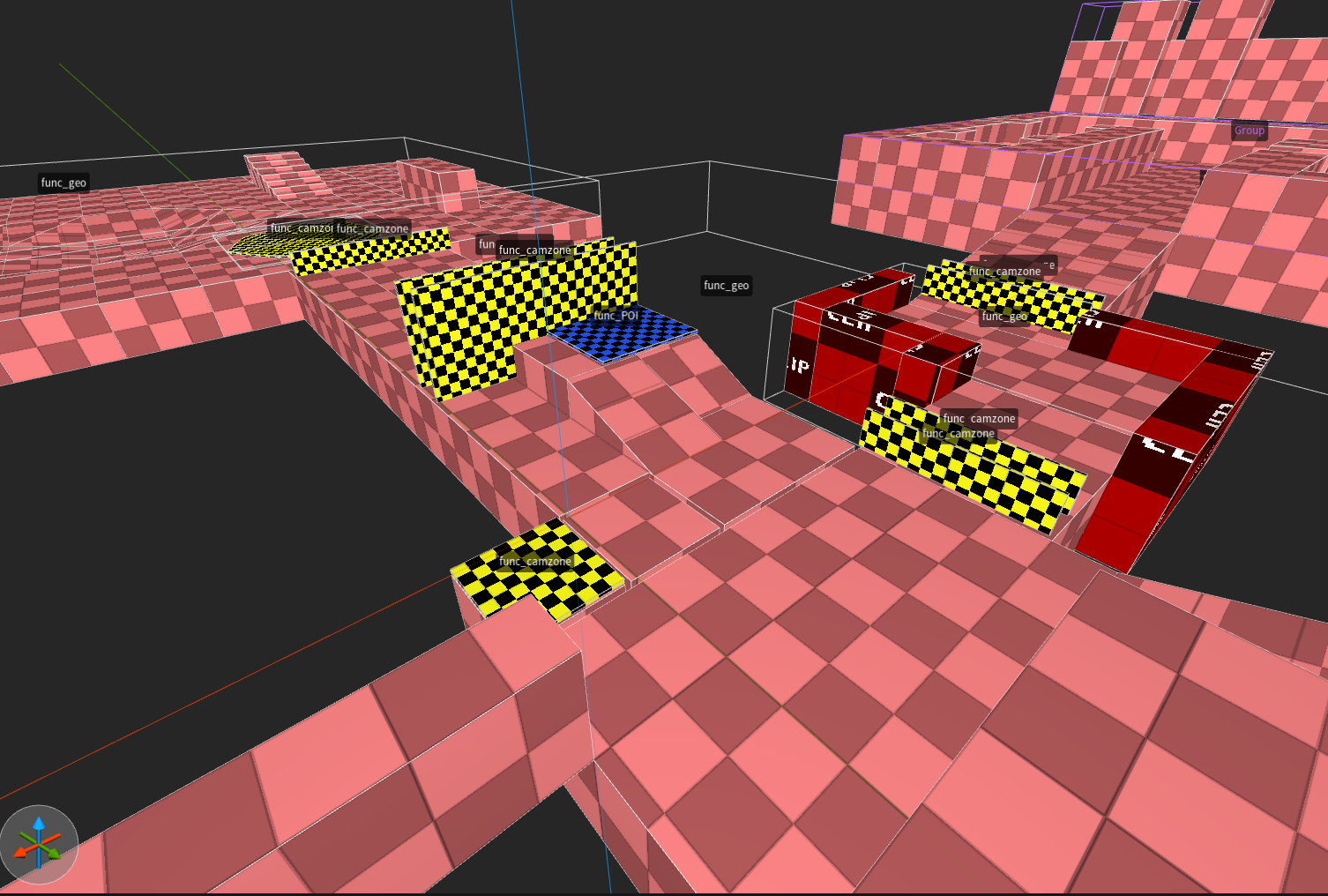
I already had these things basically implemented using only Godot scene files by the time July rolled around, but they resulted in cluttered scene trees and had some annoying limitations. Creating func_godot counterparts of my POI and Camzone objects lead to cleaner implementations and better optimizations, all while learning a lot more about godot and Trenchbroom. It took a lot of time, and I haven't made any progress toward creating anything that looks like a game really. But I consider learning and optimizing things a kind of a win.
One totally new thing related to the func_camzone work I finished was the creation of a func_camera. Originally, each POI and Camzone had a child Camera3D object that was always present. I worried that later down the line this would lead to performance problems, tracking problems, and was already griping about how cluttered it made my scene tree look.
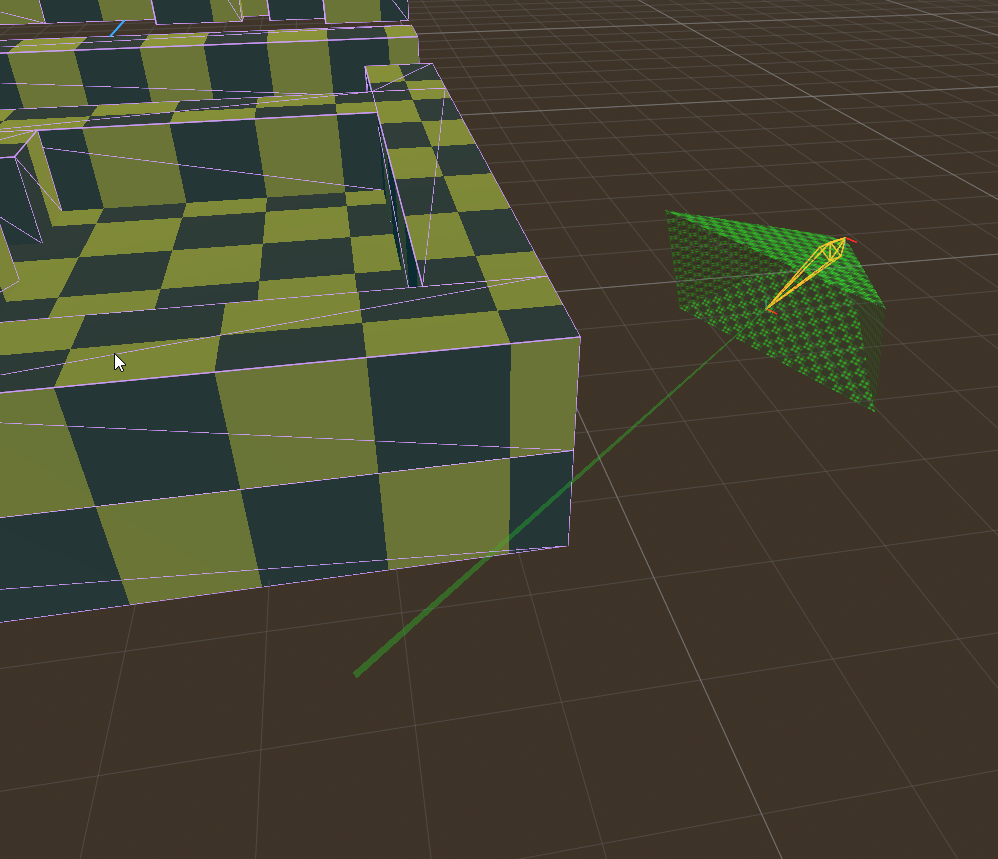
The func_camera was made to address these problems. It is a Point Entity which I place in the Trenchbroom editor. It looks like a camera, but it's actually just a reference for a specific point in space. My work flow for using these is like this: in the Godot editor I frame up a shot using a Camera3D object, then I copy the position and rotation values from the shot into the func_camera object in Trenchbroom. I also provide func_camera entities with the name of a specific camzone, which enables the player's camera to teleport to these specified rotation and position values each time they collide with the camzone (or POI). This means that I only one Camera3D object needs to exist in the scene at any time, which seems quite optimal to me.
My next goal, whenever I can figure out a balance between my new job and the rest of my life, is to work on a basic items and inventory system. I already have a foggy sense of how this would work, but I need to do more research to be sure.
unemployed man attempts to develop a game
07.10.26
Having ample time on my hands since being laid off, and ever the desire to keep learning something new, or to go deeper, lately I have been working on my first gamedev project. I guess this is kind of typical of one whose exited the software development industry, ostensibly referred to as "the games industry". But I've never done it before, so this is all very novel, and I am excited to share the progress I've made so far. In a way, I think this is me celebrating all that I loved about working on a commercial game project, enjoying some freedom from restraints and obligations set by the influence of VC money and ambiguous notions of "the market".
I'm just trying to make a game, here. That's all.
Rec Room was developed using Unity, which I fucking hate. And I have no interest in professionalization, so I never once considered Unreal Engine when deciding what I would use to build my game. But Godot always seemed like an obvious choice to me. For whatever reason I was almost more interested in learning the engine than necessarily developing a game, at first. I think the appeal for me with Godot is that it is new, open source, and there is already a neat tool which allows you to import geo designed using Trenchbroom for use in your projects.
At this early point, I don't think now is the time to speak about big aspirations. I have a few idea for specific games I could make. But, usefully, I understand the kind of game I want to make, which is helping me immensely as I develop the systems needed to support such a vision. In short, the genre I want to work in is a that of a third-person console adventure game from the late 90s and 2000s. I want specifically framed camera angles and items which can be stored in an inventory or used. Anything beyond this, I think, right now, is a detail to be consider more later on when my focus needs to be trained at setting the foundation with basic systems.
The first of which I have now completed, as of a few days ago. This is what I am calling the POI (Point of Interest) System. It isn't anything revolutionary, but I do think it is smartly designed.
POIs are basically collision volumes which recognize when players enter them, and can be interacted with by pressing a button. They contain data to be printed in a dialog box in a sequence, to provide a specific player animation that starts when interaction occurs, as well as a camera object which can be manually positioned in the scene view and toggled on or off. I have built the POI System so that multiple POIs can exist in a scene, and each can be individually configured however needed.
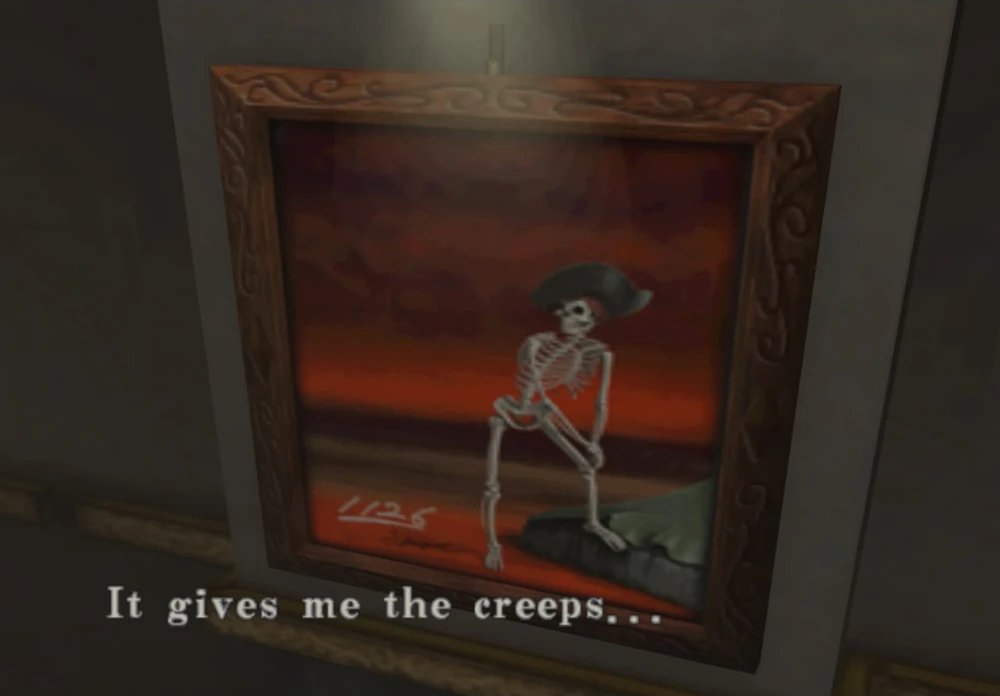
This system can be used to create points-of-interests in the environment, offering players flavorful details (e.g. walking up to a book shelf, the character lists off the spines that stand out to them) or views on important areas/puzzles (e.g. on a big canvas in the hallway, the password to a vault can be seen in the background when viewed up close).
There is more that POIs will need to support in the future, I think. They may need to be associated with an item, to either grant it to the player or, if it is in their inventory, use it up. But for now, this is what I am considering a fully-functional system. In a state good enough that I feel fine moving onto the next one I have decided to work on.
20 Big Ones Eating Dough In a Polyethylene Bag
03.02.26
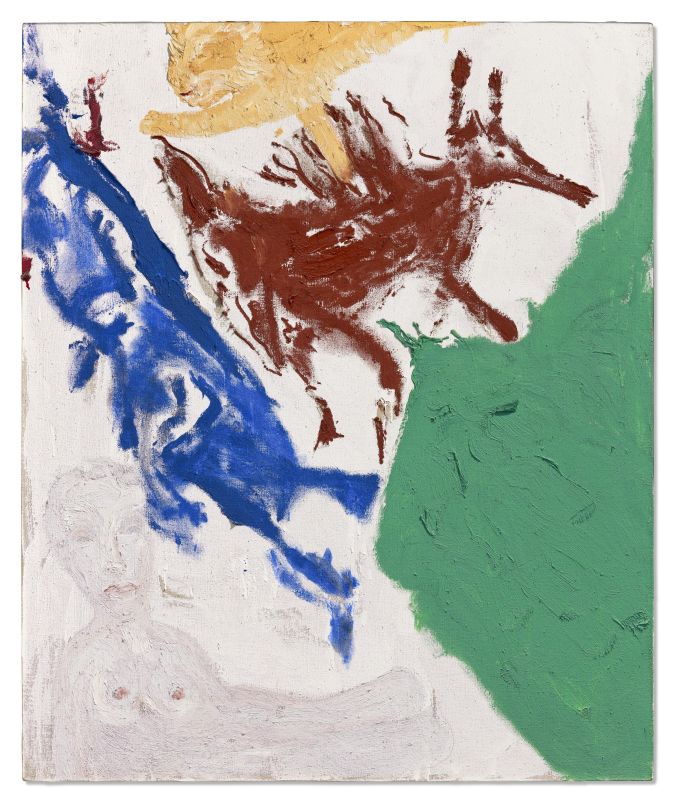
Here is a 20-song playlist I've been working on intending to offer the unanittiated but curious a comprehensive picture of the avant garde covered by Captain Beefheart and The Magic Band throughout their nearly 20 year career. This came out of a fun trend that's starting among some friends, where we create playlists like these for different bands to invite exploration and conversation about music we're really passionate about. The whole thing gets its name from the Beach Boys album 15 Big Ones. This is my contribution, about a band that I only got into within the past five years but which has reshaped my understanding of the whole impetus an artist feels that compels them to work like they do, to create the kinds of works that they do, an impact no other artist but David Lynch has really had on me.
So if you've ever been curious, but were too afraid to ask, here's 20 Big Ones Eating Dough in a Polyethylene Bag. Fast and bulbous!
- Orange Claw Hammer - (1969) Trout Mask Replica (3m33s)
- Korn Ring Finger - (1968) Safe As Milk (7m26s)
- Sue Egypt - (1980) Doc At the Radar Station (2m57s)
- Bat Chain Puller - (1978) Shiny Beast (Bat Chain Puller) (5m27s)
- White Jam - (1972) The Spotlight Kid (2m55s)
- Son of Mirror Man - Mere Man - (1968) Strictly Personal (5m20s)
- Dirty Blue Gene - (1980) Doc At the Radar Station (3m51s)
- Ella Guru - (1969) Trout Mask Replica (2m25s)
- Electricity - (1968) Safe As Milk (3m06s)
- On Tomorrow - (1968) Strictly Personal (3m26s)
- A Carrot Is As Close a Rabbit Gets to a Diamond - (1980) Doc At the Radar Station (1m38s)
- Kandy Korn - (1968) Mirror Man Sessions (8m06s)
- Sugar 'n Spikes - (1969) Trout Mask Replica (2m29s)
- The Clouds Are Full of Wine (Not Whiskey or Rye - (1970) Lick My Decals Off, Baby (2m46s)
- Semi-Multicolored Caucasian - (1982) Ice Cream for Crow (4m20s)
- Big Eyed Beans From Venus - (1972) Clear Spot (4m22s)
- Alice In Blunderland - (1972) The Spotlight Kid (3m54s)
- Moonlight In Vermont - (1969) Trout Mask Replica (3m56s)
- Flash Gordon's Ape - (1970) Lick My Decals Off, Baby (4m15s)
- Tropical Hot Dog Night - (1978) Shiny Beast (Bat Chain Puller) (4m47s)
"Spite" Progress
01.26.26
Just wanted to include an update here about the work I've done in the past year on a custom story for Amnesia: The Bunker.
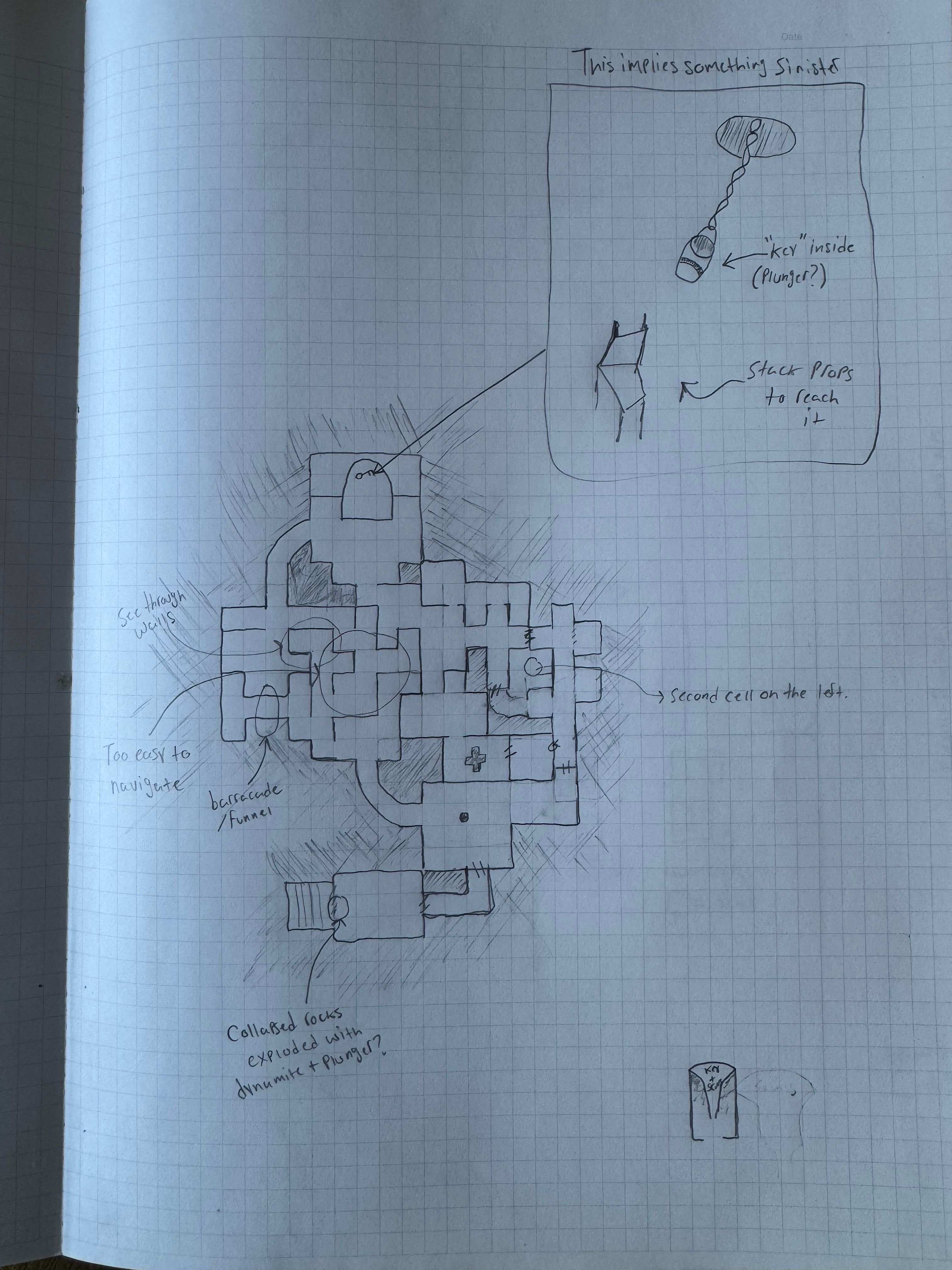
Not much gameplay here. But the environment is coming together. And the design of the labyrinth is, I think, pretty solid. Will include an image of that sketch down below, too. The editor and documentation are, unfortunately, more opaque than I am used to as compared to Unity or Trenchbroom.
Traces of Pulp
11.25.25
Amelia and I have been playing a lot of the Arkham Horror Card Game lately. It's been in my collection for a long time, but only an occasional play. We attempted to form a group with another couple to play the game, but that didn't end up working out for various reasons. And I think we both learned that we enjoy the game most when it's either just us two, or at a player count of two in general. I'd say for well over two years now we've kind of just looped through the game's core mini-campaign a few times, running practice and learner games across the three Night of the Zealot scenarios while The Dunwich Legacy sat unplayed in the box. But now we're finally playing that expansion and I think we're both really impressed by its variety and cleverness. Last night we managed to finished Scenario 2: Arkham Museum on our first attempt. It's hard to say for certain, albeit very likely, and thus a safe assumption, that the reason we made it through was because we failed to apply a rule unique to the monster in that scenario... but it seems pretty unanimous online that scenario is one of the simpler of the expansion. I don't think that means it isn't fun however, like some of the comments I'm reading may be implying. In fact, I really liked it. It was fun having to play around an unstoppable, hunter enemy while venturing out from and returning to a central hub over and over again. I think the risk is clear and thus the puzzle is easy to grasp. This is one of the least tricky scenarios, but it feels pretty immediate for it, much like the first in the Night of the Zealot.
It's a little embarassing to be involved with as many Lovecraft-themed properties as I am currently; playing the AHLCG, working on developing a scenario for the RPG, and returning to some of the literature for a better understanding of certain things about how Lovecraft does horror or science fiction and the way he depicts conspiracy and paranoia or mystery in general. But, what can I say, I have a long history with Lovecraft, his derivatives, and the literary aesthetics at work in them both (1,2,3, etc.) Admittedly, I think it would be worthwhile to go even deeper than this. I am curious by what weird path does the strain of detective fiction find its way into so called Lovecraftian works, like Call of Cthulhu and Arkham Horror. When did the pulp and pulp detective first appear? Was it there in his work in some way I don't appreciate? In the work of precursor authors like Machen and Algernon Blackwood, and in Poe, or the romantics before? In what way do these detectives, or investigative figures (for I don't think they are in truth much like the Continental Op himself) come to appear as rough and downcast as noir anti-heroes. That to my mind doesn't seem to be the kind of protagonist that a man with a biography like Lovecraft would identify with, and my feeling as of now is that somewhere along the line the DNA of these two kinds of literature fused and created the Pulp Cthulhu style that so much Lovecraftian stuff leans into. How many commonalities did noir fiction and investigative fiction and weird fiction have in the early 20th century, and was it painful or easy for them to all fuse as they now have?
This kind of investigation is something I've been half-heartedly pursuing for a little bit, ever since I bought a volume of the collected novels of Hammett and Raymond Chandler last year. I think my interest in E.C. Comics must relate as well. But reading Thomas Pynchon's Shadow Ticket over the past month, questions about the detective fiction genre have been frequently on my mind. So maybe it's time to promote this line of inquiry to a greater layer of my attention, and find how it serves all my other current interests at the same time.
A new page rises!
November 18 2025
I want to get back into the practice of documenting the things I am working on. I realize that is an important part of my process. Over the past year I think that practice has wained a bit, and helped to create a feeling of confusion and overwhelm for me. It isn't that I've stopped documenting things outright. I still keep a journal I write in fairly regulary (it varies, the month of October did not see many entries) and I have other things I write in too (a planner, select button, discord with my friends). But I think I need to organize my thoughts. And so I need to write them down. This is a new section of my website I'm calling Side Chat, which won't exactly fulfill what I am talking about here, but I hope may help me along the way. It's just a page I intend to record small thoughts or updates. For my larger posts I'll still host them on the home page, and in the blog archive.
I need to document a few things that have been going on. Each of these topics may be its own post, or could wind up mentioned in the same post.
- A summary and reflection on my time working as a designer on a project at work, the War of the Harvest Nobles. This was a very large project, and a strange circumstance for me professionally, and I think there is some signficance in its design and where the company was as it pursued investor money in LLM technology right before it laid off half of the staff.
- I have been studying Spanish for about a year now. Do I understand why I've chosen Spanish? Why learning a language has been something I've invested this much time and effort in? What are my goals, my methods, and plans?
- We played so many board games this year. I bought many and enjoyed probably a great number of them too. I am curious what my favorites have been. And how my taste has changed and what I know about it three years into the hobby. What are some games I like, that I dislike, and what do I think about playing boardgames in general as compared to playing videogames.
Against the Day
June 18 2025
Finished up Against the Day. There is so much here you cannot possibly retain or see in a first read, which at times I encountered with not a whole lot of enthusiasm (I think I started googling things like “Against the Day is boring” as far back as like March). I am really satisfied by the big picture having at last seen the whole thing. It’s as sad and beautiful and bigger than any one person as Gravity’s Rainbow is, but a great deal less horrifying. It ends somewhat happily, or at least in an abundance of found families. Some of them in the 19th and early 20th centuries of our world headed exactly to where we know it all headed, but at least one of them in another world headed into something that seemed at least pretty optimistic. But who knows? And I think that’s one of the book’s great themes: just as you wake up day after day to find yourself growing further from the person you thought you were or were headed to becoming, so too does the world and the spirit of it in like pace. Unfortunately the motivators of such change are often horrible less than lovely, and in this book it’s namely capitalism.
I was supposed to be the world’s greatest anarchist bomber, but I am doing pretty alright when I look around and take stock of things. A comforting yet haunting thing to notice about yourself.
May 28 2025
Just got through an absolute all timer Pynchon chapter in Against the Day. I’ve battled with enjoying this book, but, this whole time, it’s been for chapters much weaker than what I just read that I told myself I ought to stick it out. To think I hadn’t even glimpsed how good it could be with this book. Stupendous!